
Author: Adarsh
-
How Coir Became Part of Kerala’s Industrial Heritage
Discover how household fibre skills developed into Kerala’s organised coir industry through trade, labour, cooperatives, machinery and public institutions.
-
Coconut Fibre: From Agricultural By-product to Household Product
Learn how coconut husks are separated into coir fibre and pith, then converted into mats, rope, brushes, geotextiles and horticultural products.
-
The People and Craft Behind Kerala Coir Products
Meet the production chain behind Kerala coir products, from husk collection and spinning to weaving, backing, finishing and quality inspection.
-
Handloom and Machine-Made Coir Mats: Understanding the Difference
Compare handloom and machine-made coir mats, including quality, consistency, artisan skill, production speed, hybrid methods and buying claims.
-
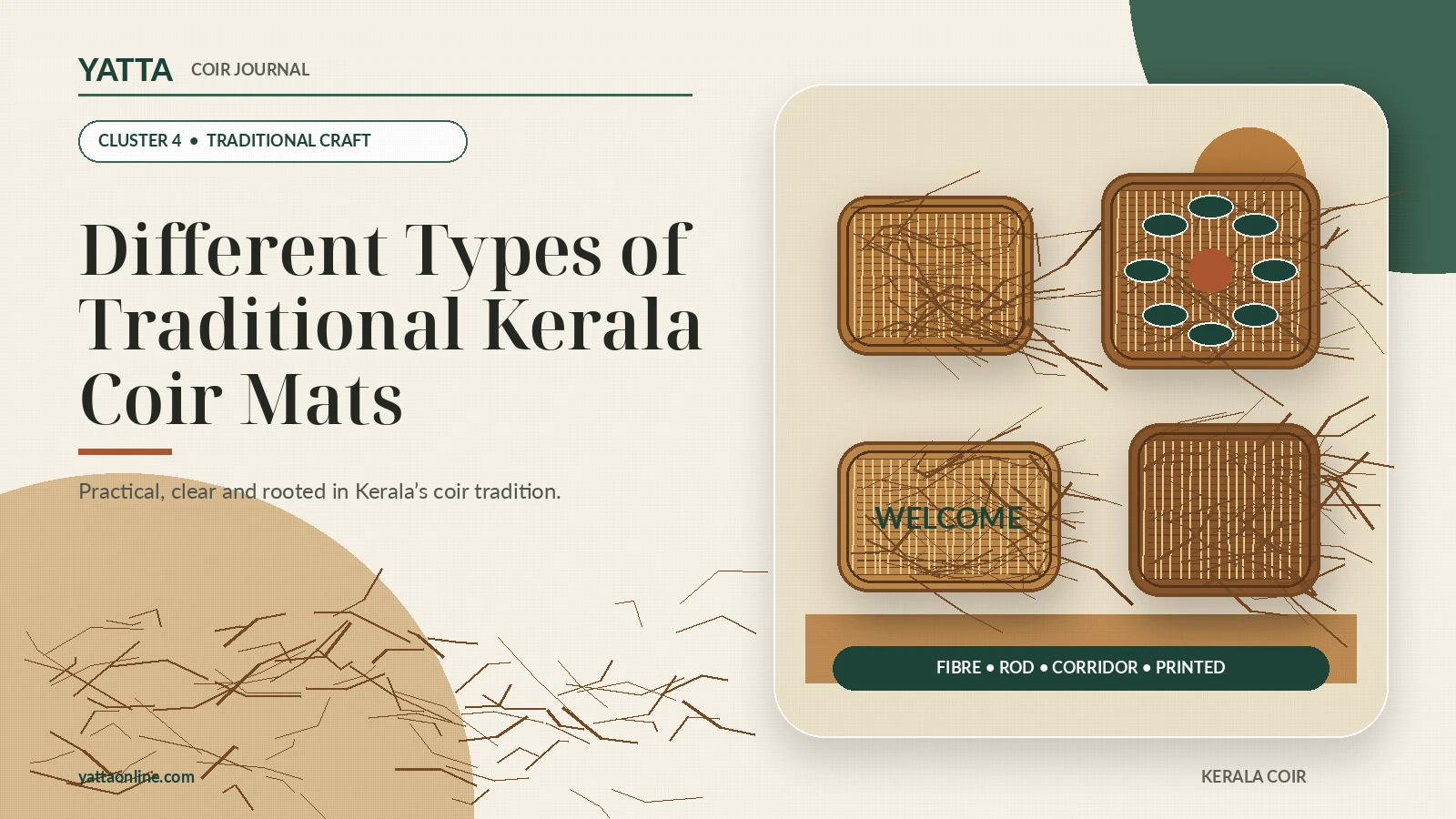
Different Types of Traditional Kerala Coir Mats
Understand fibre, creel, rod, corridor, Carnatic, loop, mesh, sinnet and rope coir mats and how their construction changes appearance and use.
-
Why Kerala Is Famous for Coir Products
Learn why Kerala became famous for coir through coconut cultivation, backwater production, skilled workers, Alappuzha trade and specialised institutions.
-
The History of Kerala’s Coir-Making Tradition
Explore how coconut cultivation, waterways, household skills, trade, cooperatives and public institutions shaped Kerala’s coir-making tradition.
-
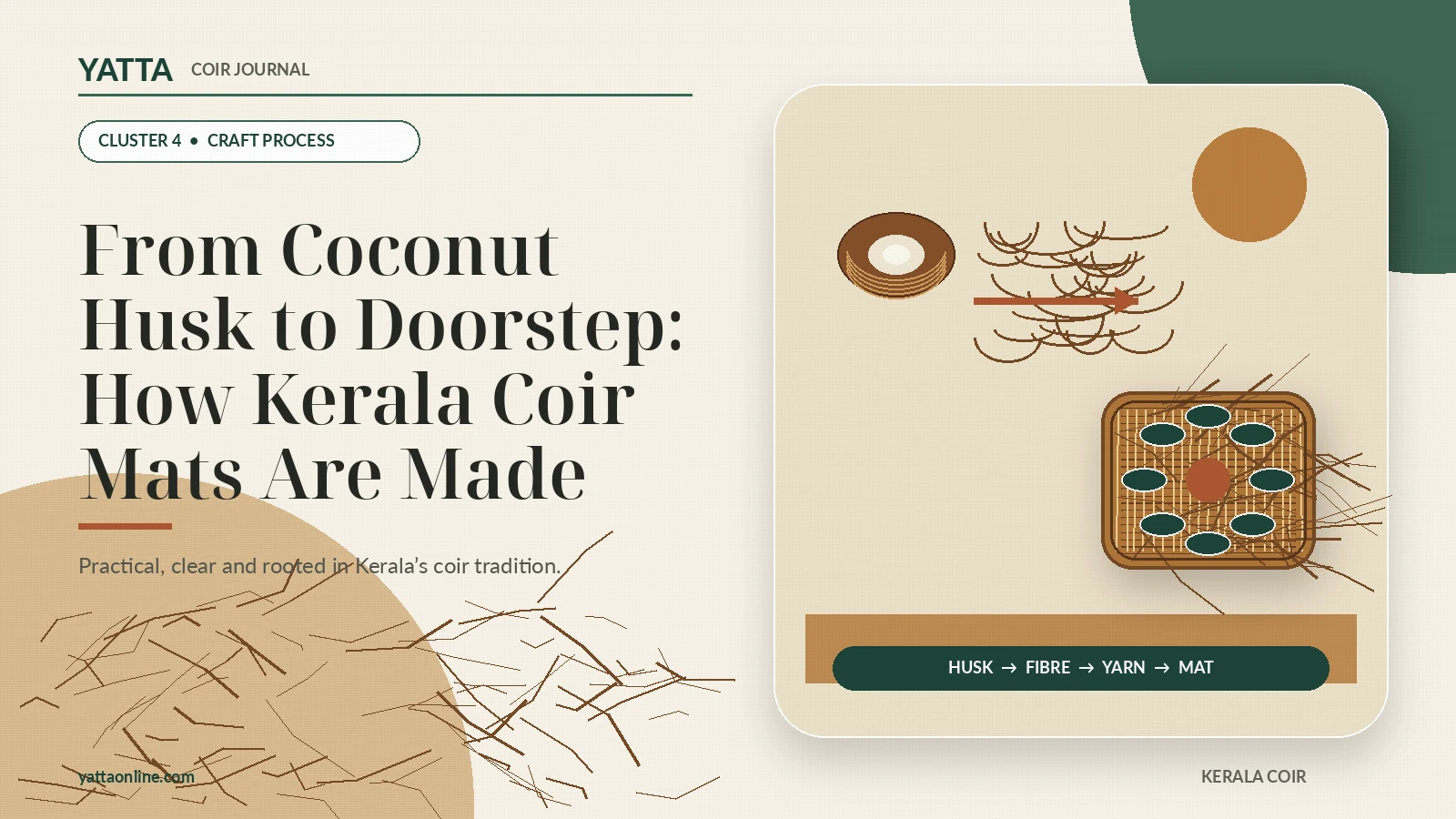
From Coconut Husk to Doorstep: How Kerala Coir Mats Are Made
Follow the journey of a Kerala coir mat from coconut husk and fibre extraction to yarn, weaving, printing, backing, finishing and inspection.
-
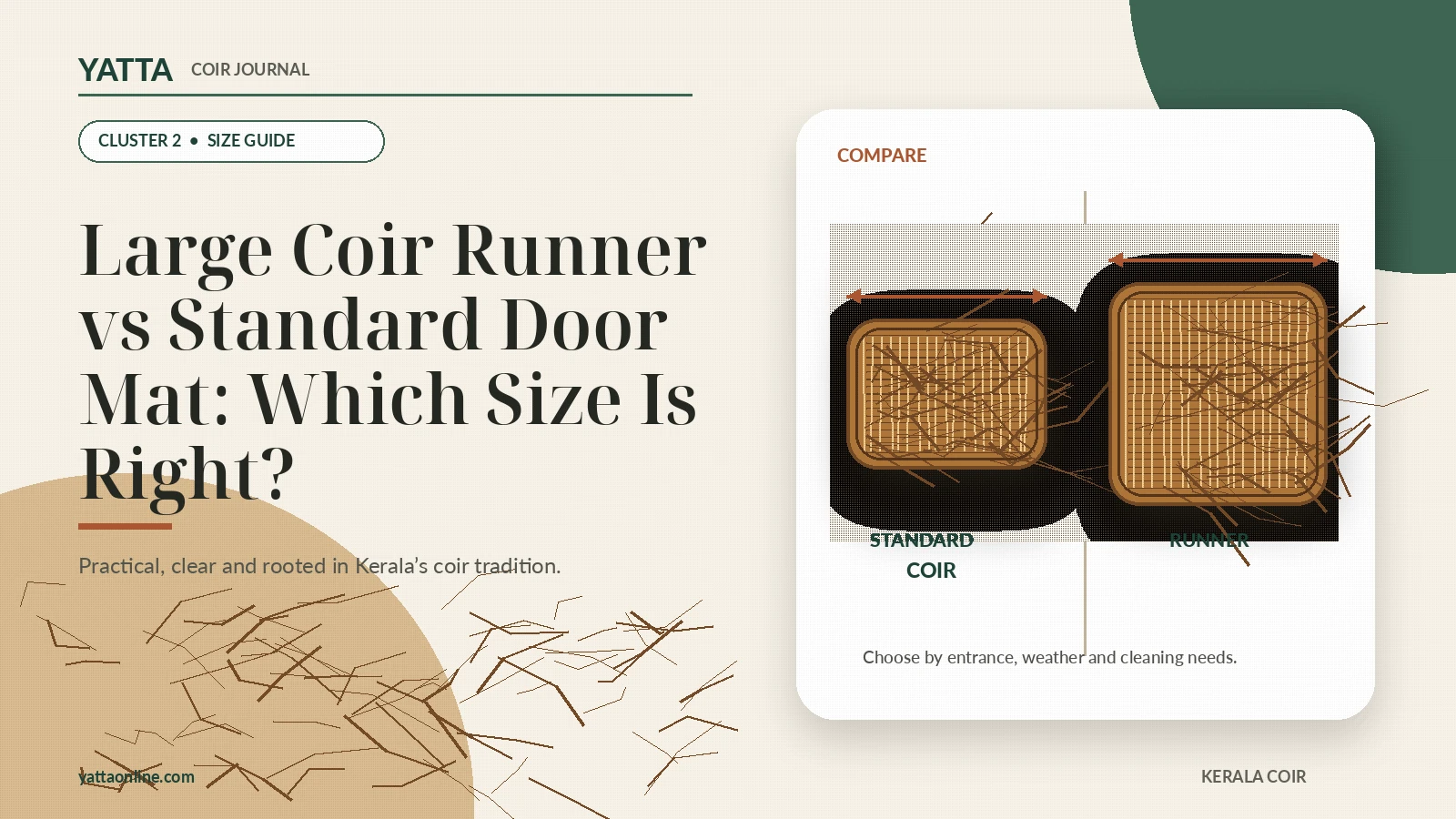
Large Coir Runner vs Standard Door Mat: Which Size Is Right?
A large coir runner offers broad coverage for double doors and villas, while a standard mat is easier to handle at compact single entrances.
-
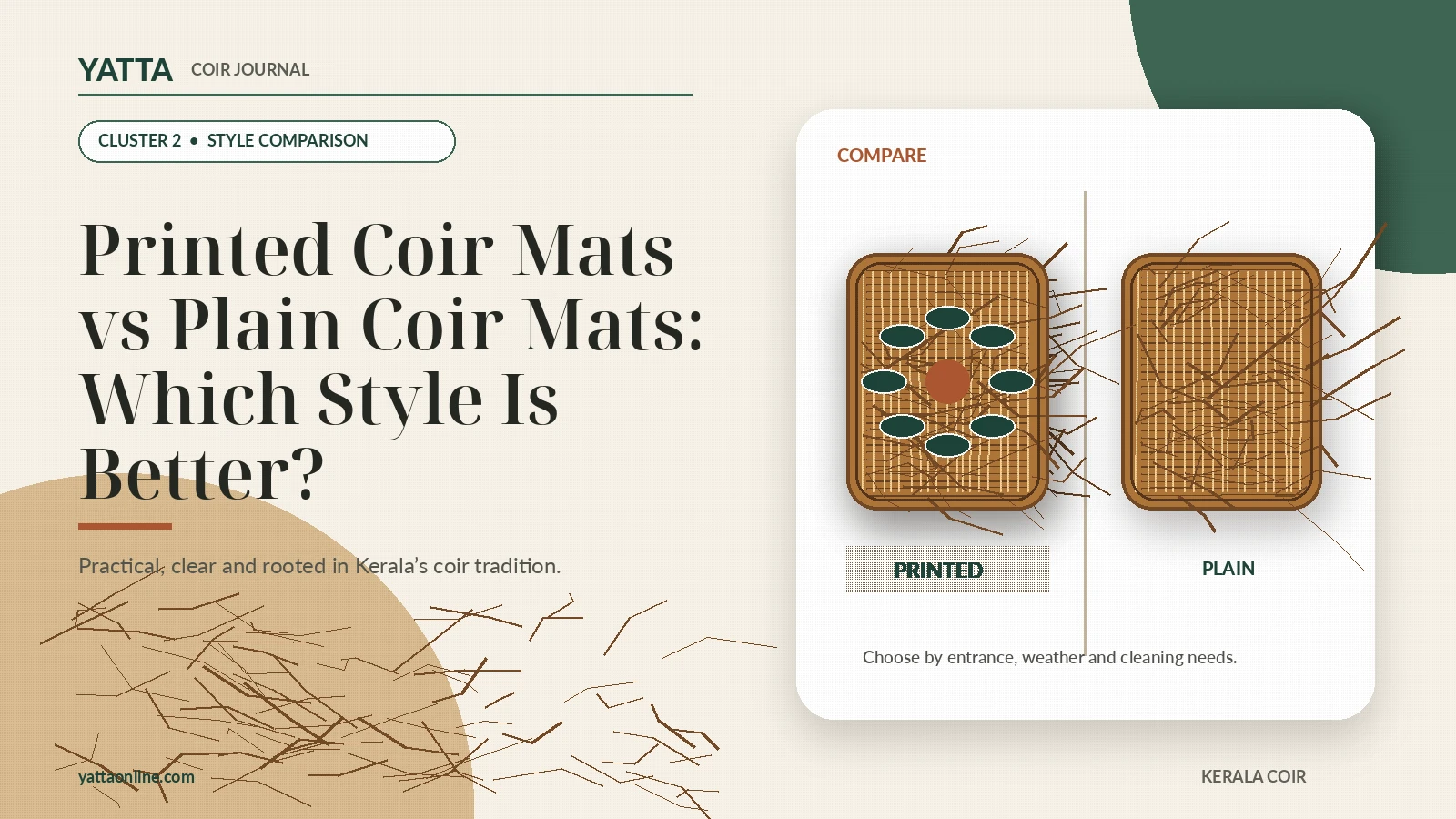
Printed Coir Mats vs Plain Coir Mats: Which Style Is Better?
Printed coir mats add colour and character, while plain mats offer a timeless natural look. Compare wear, care and entrance styling before choosing.