
Your cart is currently empty!
The Thorth: Kerala’s Secret to a Smarter, Simpler, and More Sustainable Lifestyle
In a world cluttered with thick, heavy towels that take forever to dry, an ancient secret from the coast of Kerala, India, is making a powerful comeback. It’s called the Thorthu (or Thorth), and it’s more than just a bath towel. It’s a symbol of a minimalist, sustainable, and incredibly practical way of life.

Whether you’re an eco-conscious consumer, a frequent traveler, or simply someone tired of damp, musty towels, the Kerala Thorth is the upgrade you never knew you needed. This blog post explores the rich history, incredible benefits, and surprising versatility of this authentic cotton wonder.
What Exactly is a Kerala Thorth?

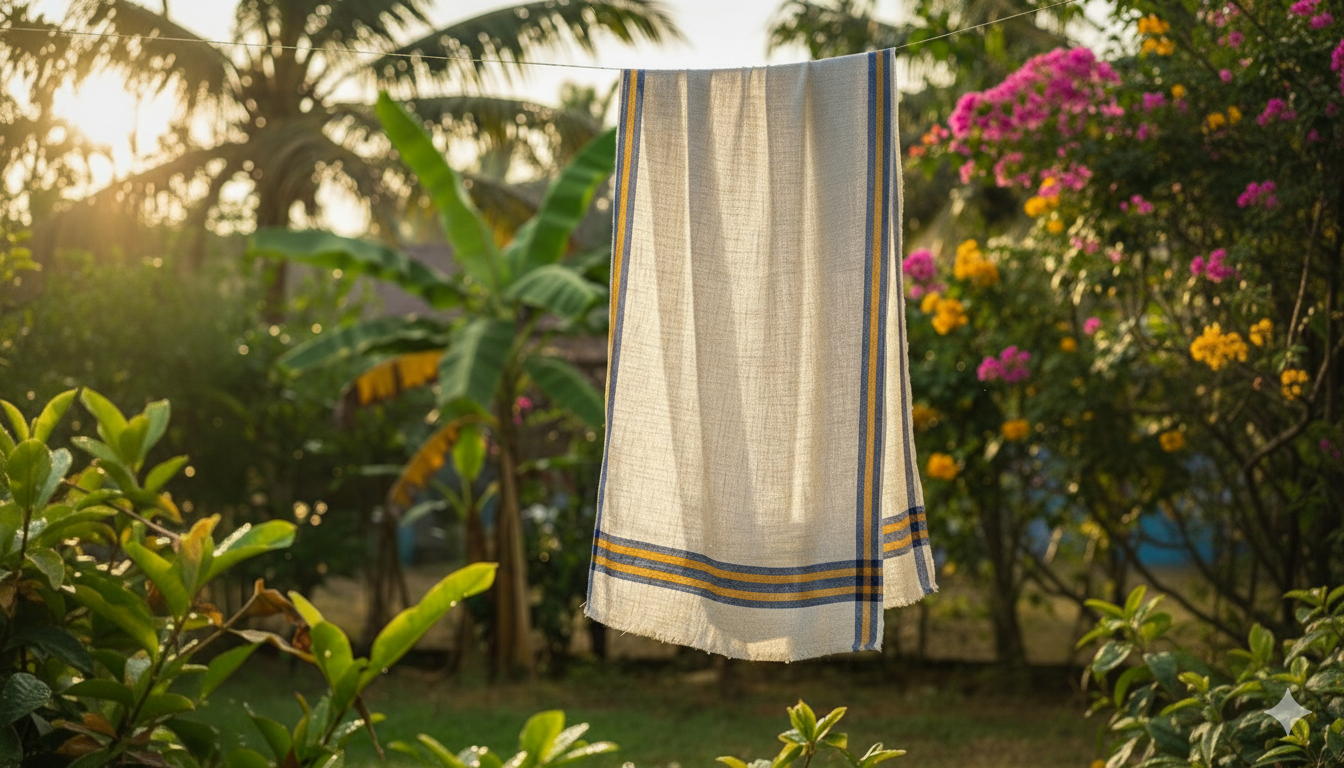
At first glance, a Thorth looks deceptively simple. It’s a thin, rectangular piece of cotton, often white or off-white with a colorful border, known as a kara. Unlike the plush, looped pile of a terry towel, the Thorth features a traditional plain, open-weave structure.
This isn’t a design flaw; it’s a masterclass in functional textile engineering, perfected over centuries to suit Kerala’s humid, tropical climate. Handwoven on traditional looms by skilled artisans, its genius lies in its simplicity.
The Thorth: Kerala’s Secret to a Smarter, Simpler, and More Sustainable Lifestyle
In a world cluttered with thick, heavy towels that take forever to dry, an ancient secret from the coast of Kerala, India, is making a powerful comeback. It’s called the Thorthu (or Thorth), and it’s more than just a bath towel. It’s a symbol of a minimalist, sustainable, and incredibly practical way of life.
Whether you’re an eco-conscious consumer, a frequent traveler, or simply someone tired of damp, musty towels, the Kerala Thorth is the upgrade you never knew you needed. This blog post explores the rich history, incredible benefits, and surprising versatility of this authentic cotton wonder.
Keywords to know:
- Thorth / Thorthu (തോർത്തു): The Malayalam word for this traditional towel.
- Kara: The simple, colored woven border.
- Puliyila Kara: A classic design featuring a very thin border.
- Chutti Patt: A more intricate arrowhead pattern woven into the edges.
A Thread Through History: The Cultural Fabric of the Thorth

The Thorth is not a modern invention; it’s an heirloom. While the luxurious Kasavu saree often steals the textile spotlight in Kerala, the humble Thorth has always been the unsung hero of daily life.
To call it just a bath towel is to miss the point entirely. For generations, it has been:
- A headwrap (kettu) for farmers and laborers, protecting them from the sun and absorbing sweat.
- A grip tool for coconut climbers, providing traction on tall palm trees.
- A makeshift carry-bag, a baby swaddle, or a cover for fermenting pickles.
- A ritual cloth used in ceremonies and funerals where other fabrics are not permitted.
Its presence in every Malayali home, from rural farms to urban apartments, speaks to its deep cultural significance. The Thorth is a testament to a time when every object had multiple purposes and was built to last.
7 Reasons to Ditch Your Terry Towel for a Thorth Today

If you’re wondering why you should switch from your fluffy bath towel to this thin piece of cotton, the benefits are both immediate and impactful.
- Hyper-Absorbent: Don’t let its thinness fool you. The open-weave cotton is incredibly thirsty, wicking moisture from your skin and hair with surprising efficiency.
- Dries in Record Time: This is the Thorth’s superpower. While a terry towel stays damp for hours, inviting mildew and odors, a Thorth can air-dry in as little as an hour, making it perfect for humid climates and busy households.
- The Ultimate Travel Companion: It’s feather-light and folds down to the size of a t-shirt. Pack two or three in the space of one regular towel. It’s a game-changer for backpacking, beach trips, and the gym.
- Eco-Friendly and Sustainable: The Thorth is a champion of sustainability. It requires significantly less water to wash, consumes zero energy when line-dried, and is made from 100% natural, biodegradable cotton.
- Gentle on Hair and Skin: The rough loops of terry cloth can cause friction and damage to wet hair. The Thorth’s flat weave is much gentler, helping to reduce frizz and breakage. It’s also ideal for sensitive skin.
- Incredibly Versatile: Use it as a bath towel, a kitchen cloth, a yoga mat cover, a sarong, a baby blanket, or even a stylish scarf. Its uses are limited only by your imagination.
- Supports Traditional Artisans: By choosing a handloom Thorth, you are helping to preserve a centuries-old craft and support the weaving communities of Kerala.
| Feature | Kerala Thorth | Conventional Terry Towel |
| Absorbency | High | High |
| Drying Time | Extremely Fast (1-2 hours) | Very Slow (8-12 hours) |
| Weight & Bulk | Very Low | High |
| Ideal For | Travel, Humid Climates, Hair | Home Use, Cold Climates |
| Eco-Impact | Low (less water/energy) | High (more water/energy) |
| Versatility | Extremely High | Low |
How to Choose and Care for Your Thorth
When buying a Thorth, look for 100% cotton and, if possible, a handloom product to ensure authenticity and quality. They come in various sizes and colors, from traditional off-white with a simple border to vibrant, contemporary designs.
Caring for your Thorth is easy:
- Wash it in a machine on a gentle cycle.
- It becomes softer and more absorbent with each wash.
- Avoid fabric softeners, which can coat the fibers and reduce absorbency.
- Line dry for best results and to maximize its eco-friendly benefits.

The Final Word
The Kerala Thorth is more than just a trend; it’s a return to mindful, practical living. It proves that often, the simplest solutions are the most intelligent. By embracing the Thorth, you’re not just choosing a better towel—you’re choosing a piece of cultural heritage, a commitment to sustainability, and a smarter way to live.
Ready to make the switch? Join the Thorth revolution and discover how this humble cloth can simplify and enrich your life.
Leave a Reply